Why Open Source Is the Future of Privileged Access Management
The privileged access management market is at a crossroads. For two decades, enterprises had essentially one choice: pay six-figure annual licenses to a handful of commercial vendors, endure months-long deployments, and accept that your most sensitive credentials live inside someone else's black box.
That era is ending.
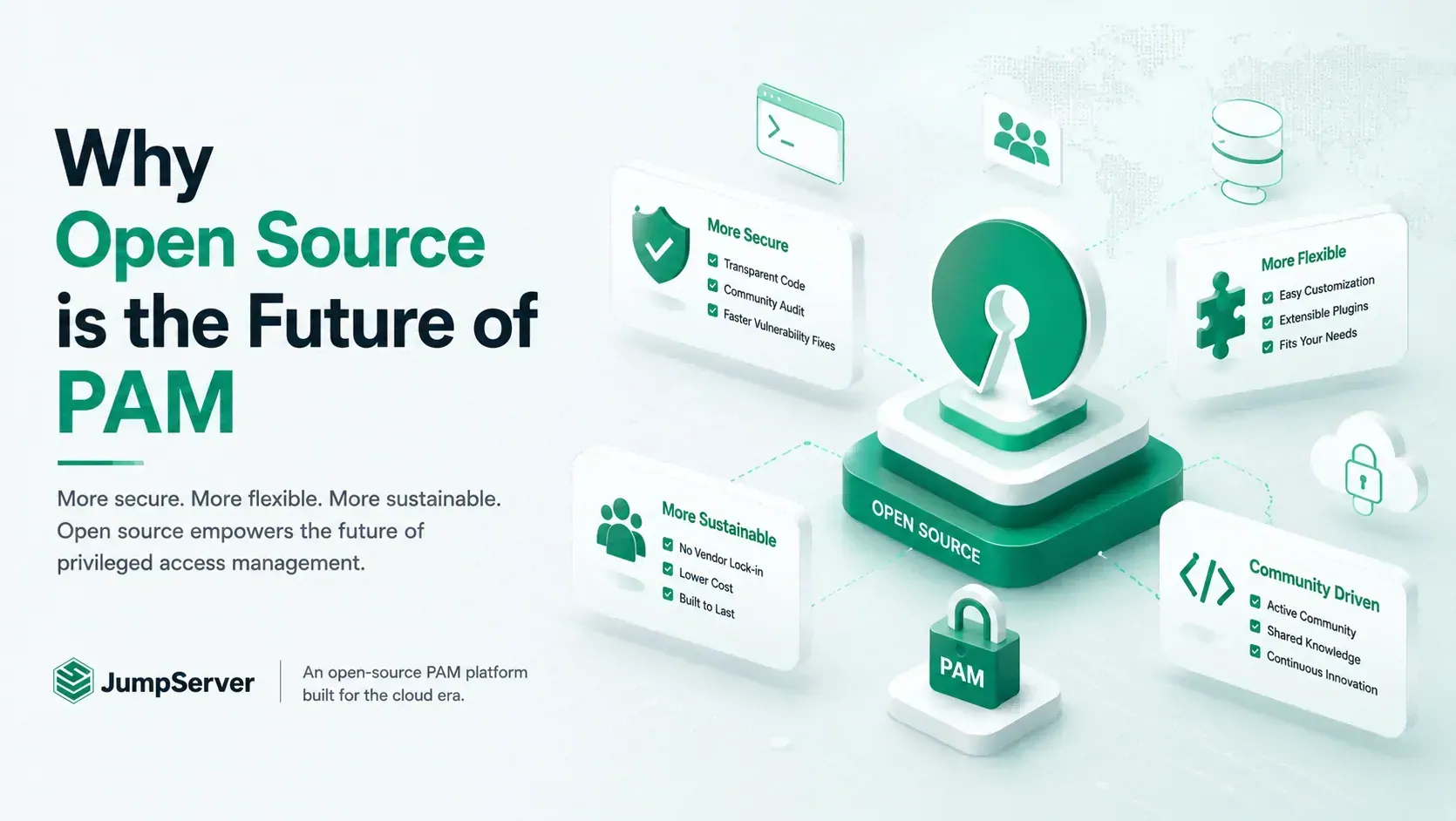
Open-source PAM has moved from "alternative" to "default consideration" for security teams worldwide. Here's why — and what it means for your organization.
The Three Forces Driving Open-Source PAM Adoption
1. The Transparency Imperative
When you deploy a commercial PAM solution, you're making a leap of faith. You trust that the vendor's credential vault has no backdoors. You trust that session recordings aren't accessible to unauthorized personnel. You trust that the codebase has been properly audited.
With open-source PAM, you don't need to trust — you can verify.
JumpServer Community Edition is fully open source under GPL-3.0 — the core PAM engine, credential vault, session recording, authentication modules, and protocol proxies are all publicly available on GitHub for inspection by your security team, third-party auditors, and the global security research community. This isn't just philosophical — it's practical. When vulnerabilities are discovered, they're fixed in days, not months (see CVE-2023-42820: patched within one week of disclosure). Enterprise Edition adds closed-source X-Pack modules for advanced features like multi-tenancy, enterprise SSO, and multi-cloud asset sync — but the core platform you rely on for access control and audit is fully transparent.
2. The Economics of Scale
The numbers tell a stark story:
| Legacy PAM Vendor | JumpServer Community | |
|---|---|---|
| Annual license (500 assets) | 30,000–150,000+ | $0 |
| Implementation services | 50,000–200,000 | $0 (self-service) |
| Deployment time | 6–12 weeks | 30 minutes |
| Per-asset pricing | Yes (cost grows with scale) | No (free up to 5,000 assets) |
| Source code access | No | Yes (Community Edition, GPL-3.0) |
A Fortune 500 financial services company recently shared that migrating from a legacy PAM to JumpServer reduced their licensing costs by 90%. Their deployment took less than a day. These aren't edge cases — they're becoming the norm.
3. Community Velocity
Closed-source vendors ship features on their roadmap. Open-source projects ship features on the community's roadmap.
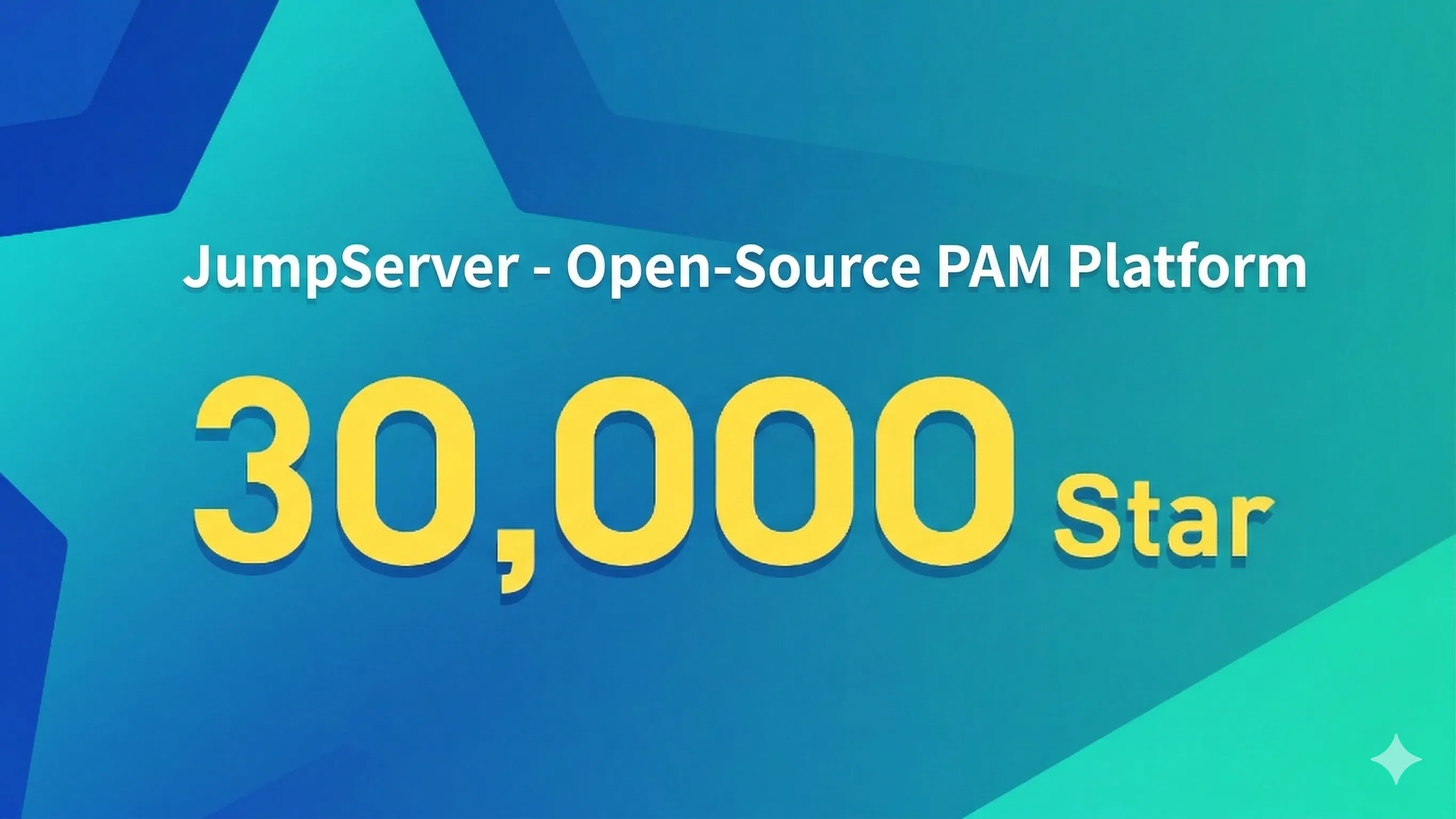
JumpServer's 30,000 GitHub stars aren't vanity metrics — they represent a global community of contributors who add database drivers, protocol support, integration modules, and security patches. When a company needed ClickHouse database support, a community member built it. When enterprises needed Azure Entra ID SSO integration, it appeared in the next release.
The result: an open-source PAM platform that supports SSH, RDP, VNC, Telnet, Kubernetes, MySQL, Oracle, SQL Server, PostgreSQL, MongoDB, Redis, ClickHouse, and web applications — with new protocols added continuously by the community.
What "Open Source" Actually Means for Your Security Posture
Let's address the elephant in the room: some security teams hesitate at "open source" because they equate it with "less secure." The opposite is true.
- Self-hosted = data sovereignty. Your credentials, session recordings, and audit logs stay on your infrastructure. Not a vendor's cloud. Not a third-party data center. Your servers, your control. This matters enormously for regulated industries (finance, healthcare, government) and for any organization subject to data residency requirements.
- Community-audited = more eyes, fewer bugs. Linus's Law applies: "Given enough eyeballs, all bugs are shallow." JumpServer Community Edition's code is continuously scrutinized by thousands of security engineers worldwide. Commercial vendors' code is seen by their internal team alone.
- No vendor lock-in. If a commercial PAM vendor raises prices, changes their roadmap, or gets acquired (as CyberArk was by Palo Alto Networks in 2026), you're stuck. With JumpServer Community Edition, the core code is yours under GPL-3.0. The data is yours. The future is yours.
The Enterprise Question
"Open source is great for hobby projects, but can it handle enterprise requirements?"
JumpServer Enterprise Edition is used by over 3,000 organizations — including Cummins, Tencent Music Entertainment, Canadian Solar, and Kingsoft Office — in production environments managing tens of thousands of assets. It supports:
- Multi-tenant organization isolation
- Enterprise SSO (SAML 2.0, OIDC, OAuth2, CAS)
- High-availability cluster deployment
- Multi-cloud asset auto-discovery (AWS, GCP, Azure)
- SOC 2, PCI DSS, and ISO 27001-aligned audit trails
- SLA-backed technical support
- AWS Marketplace availability
The Community Edition is free forever (GPL-3.0, fully open source) for up to 5,000 assets. When you need enterprise features — multi-tenancy, enterprise SSO, HA deployment, multi-cloud sync — the Enterprise Edition adds these via closed-source X-Pack modules, with the upgrade path taking under 30 minutes with zero downtime.
The Bottom Line
The question isn't whether open-source PAM is "ready for the enterprise." The enterprise is ready for open-source PAM. The combination of Community Edition transparency, 80-90% cost reduction, self-hosted data sovereignty, and the option to layer on enterprise features when needed is simply too compelling to ignore.
Ready to see it for yourself? Deploy JumpServer Community Edition in 30 minutes — no credit card, no sales call, no commitment.
curl -sSL https://github.com/jumpserver/jumpserver/releases/latest/download/quick_start.sh | bash
Or start a 14-day Enterprise free trial to explore advanced features with guided onboarding from a JumpServer solutions engineer.